Labour Reclaims Leftwing Voters in Holborn Byelection Victory
Labour wins Holborn and St Pancras byelection, recovering ground with leftwing voters after Starmer's departure. Candidate Sagal Abdi-Wali secures 45% of vote.
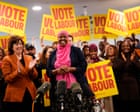
Labour's Strategic Recovery Among Leftist Supporters
The Labour byelection victory in Holborn and St Pancras represents a significant shift in the party's trajectory, signaling a resurgence of support among leftwing voters who had grown increasingly distant during the preceding political period. This breakthrough moment demonstrates Labour's renewed appeal to progressive constituencies and marks a turning point in the party's electoral momentum.
The Labour byelection triumph underscores the party's capacity to reconnect with disillusioned voters seeking representation aligned with their core values. Labour's deputy leadership has positioned this success as emblematic of a broader realignment within the party's base, particularly among those who felt sidelined by previous policy directions.
Sagal Abdi-Wali Secures Decisive Victory
Labour candidate Sagal Abdi-Wali captured 45% of the vote in the Holborn and St Pancras byelection, a commanding performance that firmly retained the historic north London constituency for the party. The scale of her victory became evident when comparing results against the principal opposition candidate, who managed to secure only 33% of the ballast.
Abdi-Wali's success in this traditionally Labour-held seat, previously represented by senior party figures, demonstrates voter confidence in the party's direction and local representation quality. The 12-percentage-point margin between first and second place reflects substantial public backing for Labour's campaign message and candidate positioning.
The Green Party's Diminished Standing
The Holborn and St Pancras byelection results proved particularly revealing regarding shifts in the broader leftwing electorate's preferences. Prior to recent political developments, the Green Party had enjoyed polling advantages over Labour among environmentally conscious and progressive voters. However, this byelection exposed the limits of the Greens' electoral penetration and their inability to consolidate their apparent momentum into concrete parliamentary gains.
Current polling data positions Labour fifteen points ahead of the Green Party nationally, a substantial reversal from the previous landscape where the Greens maintained measurable leads. This numerical gap reflects not merely single-election dynamics but systemic changes in how leftwing voters distribute their political support.
Turnout Considerations and Electoral Context
The byelection took place amid relatively modest voter participation levels, a characteristic common to mid-term parliamentary contests conducted between general elections. Despite the lower turnout environment, Labour managed to mobilize its base effectively and communicate its message to key demographic segments within the constituency.
Byelections frequently attract diminished public engagement compared to general election cycles, yet their outcomes can prove disproportionately significant for party morale and media narrative formation. The Holborn and St Pancras contest exemplified this dynamic, with implications extending considerably beyond the specific electoral jurisdiction.
Strategic Implications for Labour's Direction
Labour's deputy leadership has emphasized that the byelection victory reflects a broader phenomenon of leftist voters reassessing their political allegiances and returning to the party fold. This interpretation suggests that the recent departure of previous leadership created space for repositioning and reconnection with constituencies that felt marginalized or poorly represented.
The party's communications strategy has highlighted this narrative of recovery and restoration of trust among progressive supporters. Such messaging appears to resonate with voters seeking reassurance that Labour remains authentically committed to leftist principles and social justice objectives.
Holborn and St Pancras: Historical and Political Significance
The Holborn and St Pancras seat occupies particular prominence within Labour's historical geography. The constituency's previous representation by prominent party figures added symbolic weight to the Labour byelection contest, transforming it beyond a routine parliamentary vacancy into a referendum on the party's standing with its traditional support base.
Retaining this traditionally safe seat proved essential for Labour's credibility and internal morale. The decisive victory margin ensures that potential questions about the party's electoral viability were definitively answered in Labour's favor, establishing momentum heading forward.
Broader Electoral Landscape and Party Positioning
The Labour byelection outcome emerges within a context of shifting political dynamics and voter realignment. As traditional party loyalties evolve and voter preferences reflect changing priorities, byelections serve as valuable indicators of emerging trends and shifting electoral coalitions.
Labour's performance in Holborn and St Pancras, combined with significant polling leads over the Green Party, suggests the party has successfully repositioned itself as the primary vessel for leftwing political sentiment and progressive policy ambitions. This positioning carries substantial implications for forthcoming electoral contests and the party's longer-term trajectory.